Jacksonville's trusted chimney experts for over 20 years. We inspect, clean, repair, and protect chimneys across Duval, St. Johns, Clay, Nassau, and Baker counties.
From annual cleanings to full cap-and-pan replacements — we handle everything your chimney needs to be safe and ready to use.
Annual cleaning removes creosote buildup and soot deposits that can ignite into a dangerous chimney fire. Schedule before fall — we're less busy and prices are lower in spring and summer.
Single-page, easy-to-read report the same day. We tell you what's safe, what needs attention now, and what to watch over time — without unnecessary upselling.
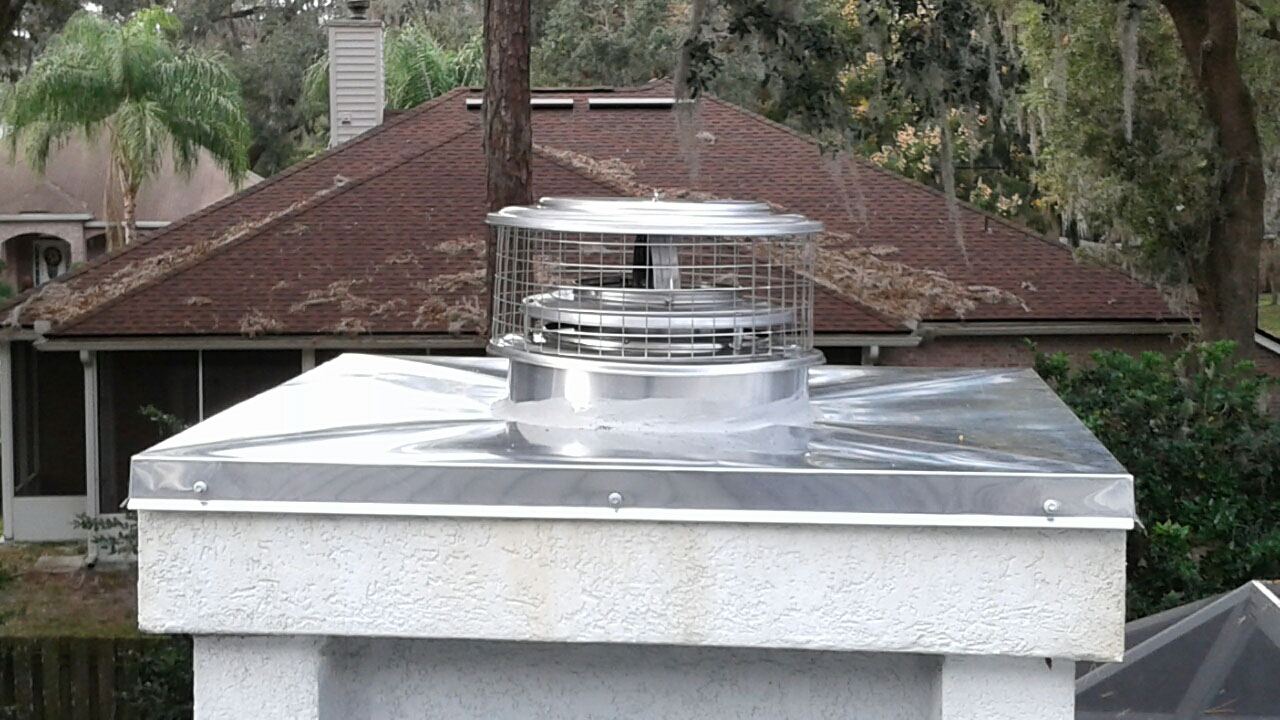
Florida's galvanized metal caps and pans rust through over time. We replace them with aluminum pans (custom-made locally) and stainless steel caps that will never rust again.
Cracked crowns, spalling brick, damaged mortar joints — we repair masonry chimneys to stop water intrusion before it becomes a major structural problem.
Tropical heat, humidity, and Florida's rain cycles are hard on chimneys. We identify and stop leaks — because you don't have to be using your fireplace for a rusty cap to let water into your walls.
Cracked refractory panels inside your pre-fab firebox are a safety hazard — they're the only barrier between your fire and the combustible framing behind the wall. We replace them before they fail.
Tropical heat, extreme humidity, heavy rain, and hurricane-force winds put demands on chimneys that most of the country never deals with. Most national chimney guides aren't written for Florida.
Every chimney in the Jacksonville area was built with galvanized metal caps and chase pans. Galvanized metal in Florida's climate eventually rusts, becomes porous, and leaks. That's not a question of if — it's a question of when.
Most homeowners don't realize their chimney is a fire hazard until it's too late. Here's what's happening inside your flue every time you light a fire.
Every fire you have deposits a little bit of soot on the flue pipe wall. It doesn't seem like much at first. But fire after fire, season after season, the soot builds up — and it's highly flammable.
The technical term is creosote. It coats the inside of your flue in layers. At first it looks like a thin film. Eventually it's a thick, tar-like buildup that coats the walls like a sleeve.
Then one night, a single ember floats up the chimney, lands on the creosote... and starts a chimney fire. These fires can burn at over 2,000°F — hot enough to crack flue tiles, ignite nearby wood framing, and spread to the rest of your home.
"This is preventable. An annual cleaning removes the creosote before it becomes a hazard."
We made this short video to show you exactly what's happening inside your chimney — and why skipping your annual cleaning is a gamble with your home's safety.
Two minutes that could change how you think about your fireplace.
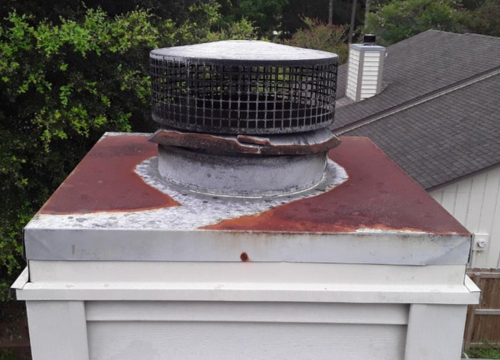
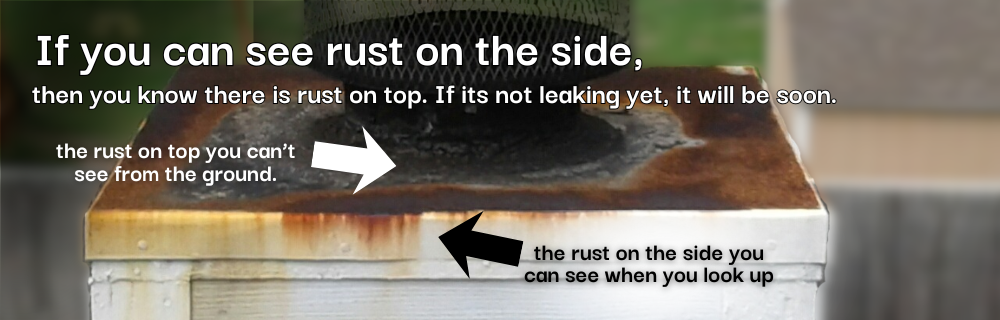
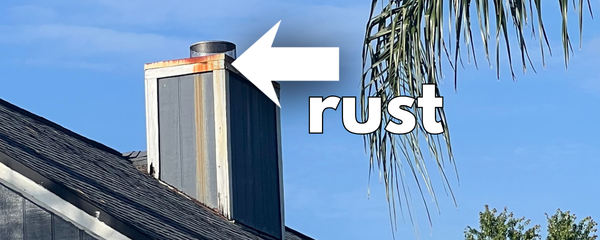
Call After You WatchHere's the rule: if you can see rust on the side of your chimney, there is definitely rust on the top. If it's not leaking yet, it will be soon.
Every Jacksonville-area home was built with galvanized metal caps and chase pans. Galvanized metal in Florida's climate rusts through over time. Leaks don't stay the same — they always get worse. Every time it rains, a little more rusted metal washes away.
Water pouring into your walls causes rot and mold. Water sitting on the firebox top causes it to rust through. At that point you're looking at a full replacement — $5,000–$8,000 and an unsafe fireplace.
Our solution: We replace chase pans with custom aluminum (made by a local sheet metal shop — will never rust) and caps with stainless steel. You won't have to deal with this again.
Have Your Cap Checked
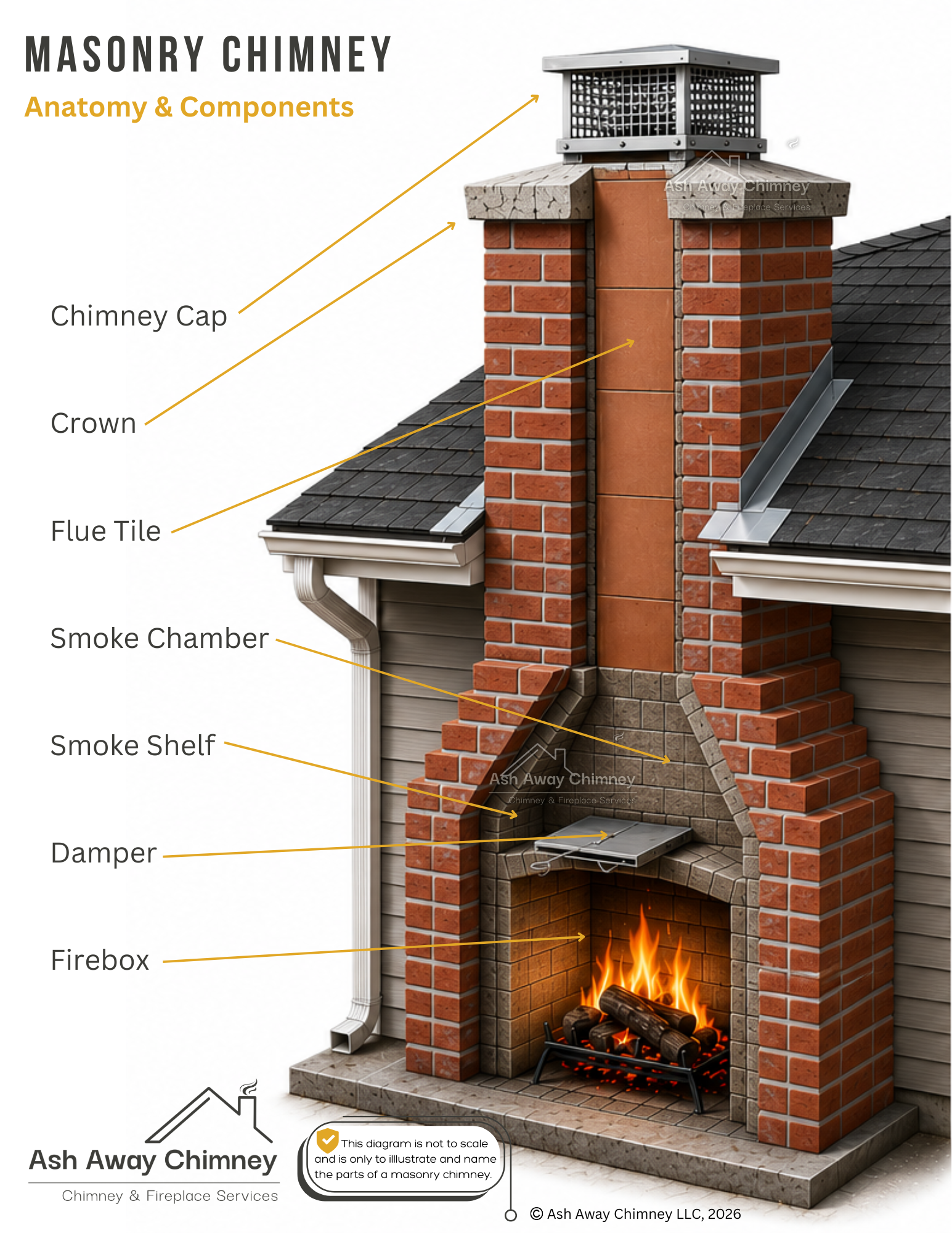
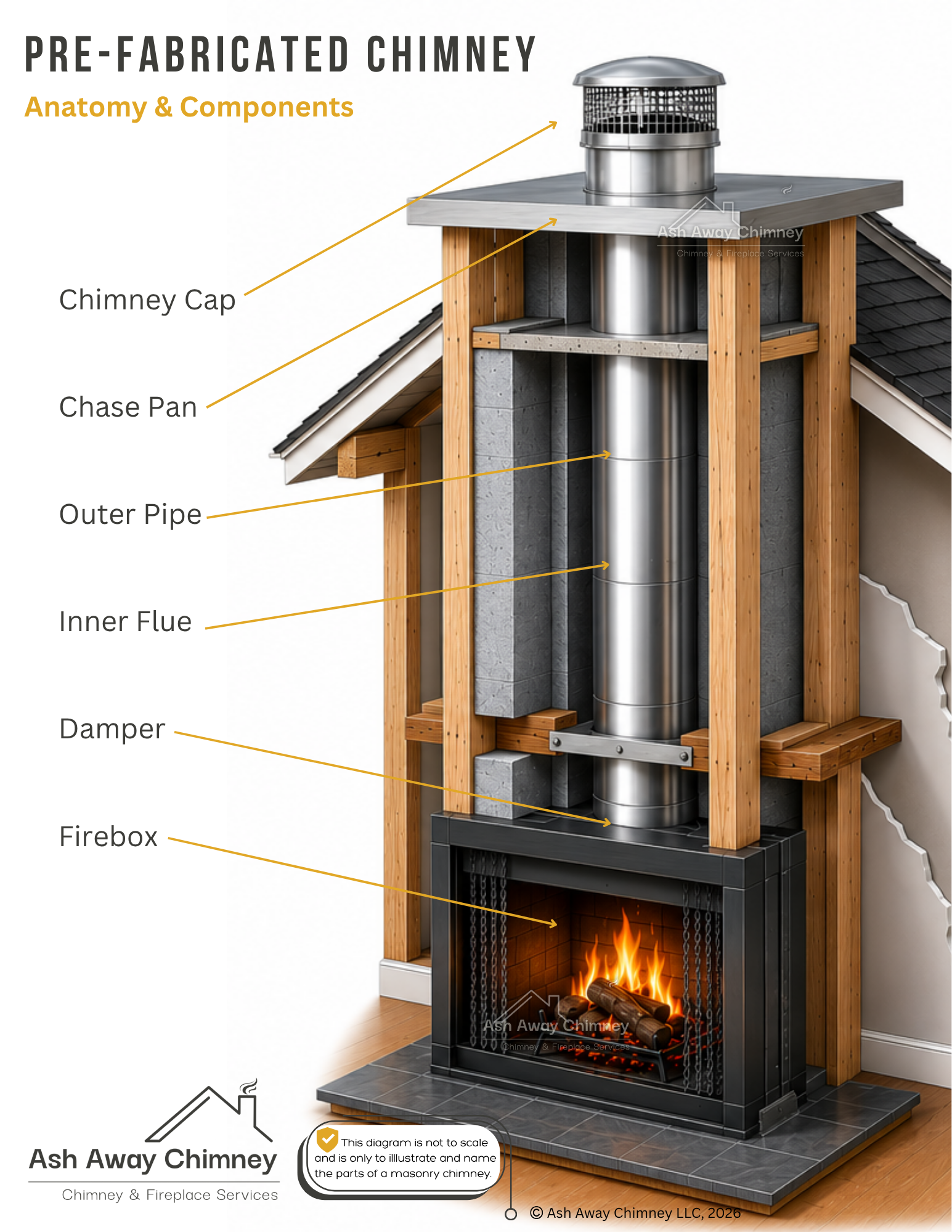
Masonry and pre-fabricated chimneys look similar from inside your living room — but they have different parts, different maintenance needs, and different common problems.
Built from brick, block, or stone with a clay tile flue liner. Found in older homes and custom builds. Parts include the firebox, smoke shelf, smoke chamber, flue tiles, crown, and chimney cap. The crown (the concrete cap at the top of the brickwork) is a common failure point in Florida's climate — cracking allows water in.
A factory-built metal system inside a wood framed "chase" — the exterior box you see. Consists of a firebox, damper, air-cooled outer pipe, inner flue, chase pan, and chimney cap. Almost every Jacksonville-area home built in the last 40 years has this type. The chase pan and cap are the most common failure point.
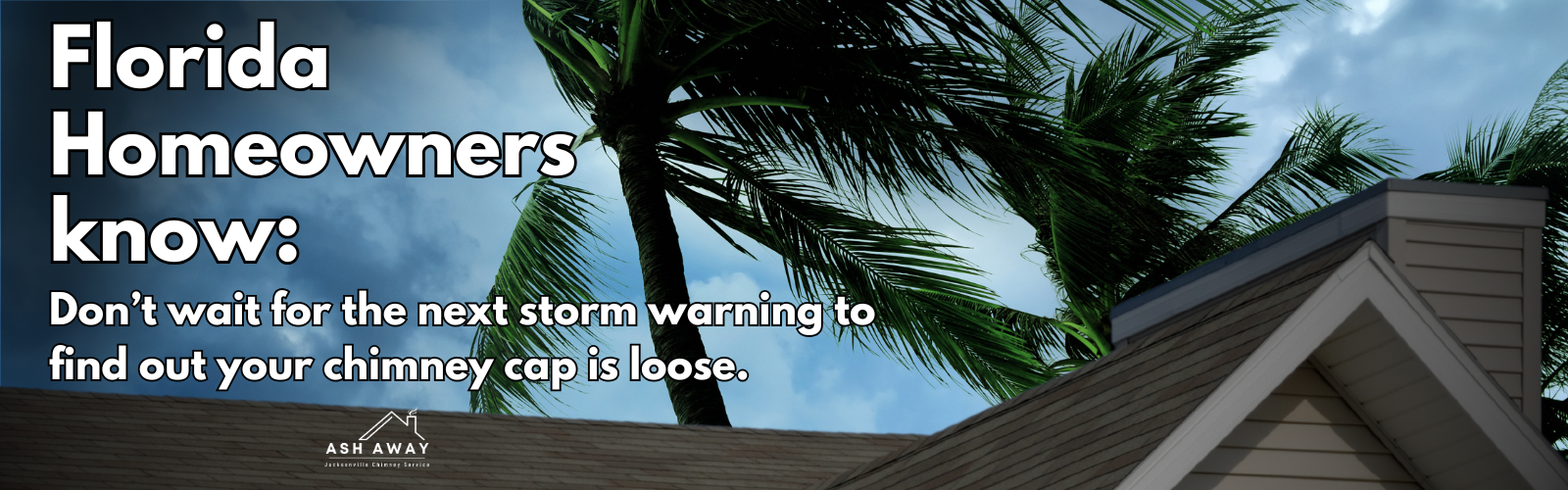
"The time to call the chimney man is NOT three days before a storm."
When a hurricane or tropical storm blows through, chimney caps can blow off entirely — leaving your flue wide open to rain, debris, and animals. A missing cap also means water pours straight down into the firebox and your walls.
The smart move: have your cap inspected before summer storm season begins. If it's already rusted or loose, we replace it while there's no emergency and no wait. Post-storm, we're booked out for weeks.
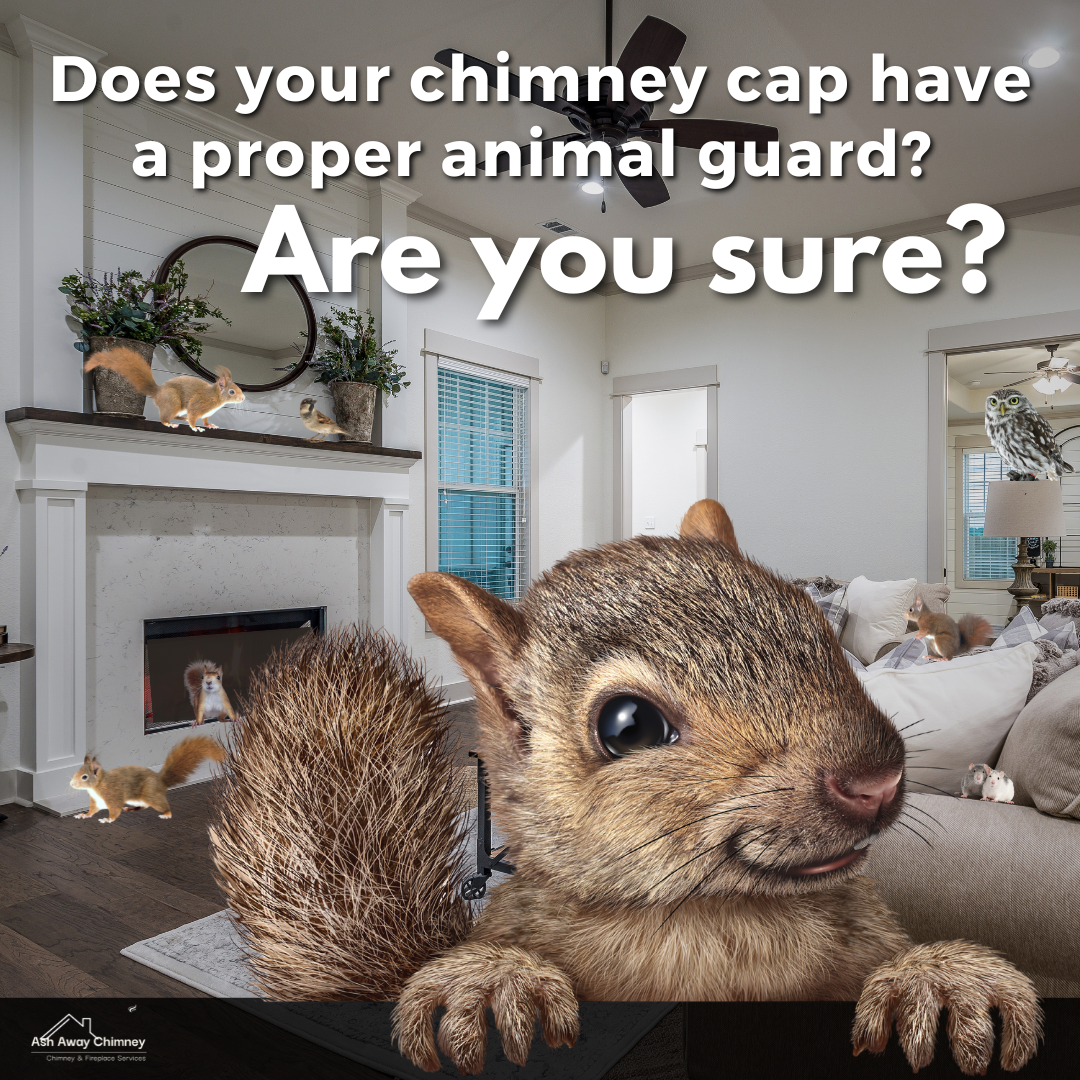
Schedule Before Storm SeasonAn open or damaged chimney cap is an invitation. Squirrels, birds, raccoons, and owls regularly find their way into chimneys — and sometimes into your home.
Beyond the obvious problem of animals in your living room, nesting materials inside the flue are a fire hazard. And some birds (like chimney swifts) are federally protected — once they've nested, you can't remove them until the fledglings leave.
A proper stainless steel cap with a mesh animal guard solves all of this permanently. It also keeps debris and leaves out of the flue.
Check Your Cap TodayHome inspectors in Florida rarely understand chimney systems. We see reports every week that miss real hazards — and make a big deal about things that aren't problems. Here's when to call us.
If you see rust on the side of the chimney box where water runs off, it almost certainly looks worse on top where water sits. Rusty chase pans leak into walls. It always gets worse — never better.
A well-maintained chimney lasts a very long time. But if it hasn't been properly cared for, damage accumulates — water intrusion, cracked flue tiles allowing carbon monoxide in, or creosote buildup that won't contain a chimney fire.
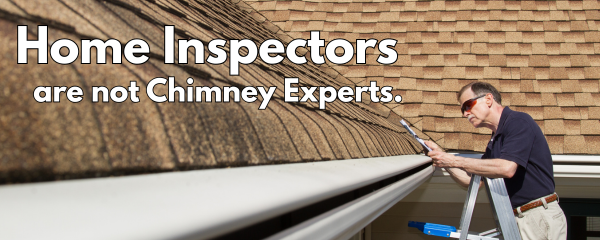
Home inspectors, especially in Florida, aren't trained on chimneys. They use wrong names for the parts, miss real hazards, and flag non-issues. When they write "have chimney inspected by professional," they genuinely don't know what they're looking at.
It happens all the time: someone calls in the fall, firewood stacked in the corner, wanting to "just make sure it's safe." Then we have to tell them the firebox is rusted through and they need $5,000–$8,000 in repairs. Have it checked before closing.
We understand the difference between a buyer and a seller — and we won't blow up your deal.
⭐ See all our reviews on Google · Angi · ThreeBestRated
We serve the greater Jacksonville area including all the communities below. If you're not sure if we reach you, just call — we probably do.
Whether you need a cleaning, an inspection before closing, or your cap replaced — we'll take care of it. Serving Northeast Florida for over 20 years.
(904) 379-2185Mon–Fri · Serving Duval, St. Johns, Clay, Nassau & Baker Counties